@EmmySobieski Thank you for sharing your lessons @EmmySobieski. I refer your parlays to my friends. If there is a sudden spike in LinkedIn profile visits from India, it might be coz I quoted you in my weekly webinar series - "Building personal brand on LinkedIn" :
@MariusCern In any field, constraints and psychology should be discussed more. Happy that this is now emerging. Will you tweet from pov of design?
@PaiNishant @fowlware Are you guys talking abt me 😜
@davidfoxio @dr If you are auditing only your site, you can use their free plan. I use it and derive a lot of insights.
@chattychd @Deaphen Chatty: Is there a drone category for kids & home use? I want to teach my kids about drone and I'm not able to get a clear answer on this.
@Justinsua @William3Willis Well said Justin. You’ll never be fully ready. In feb, I plunged into starting a weekly webinar show. I felt what you are saying - not fully ready. I started anyway. I am learning as I am doing. Scary, but fulfilling too.
@jsparkblog I worked with cardiac surgeons in my first job. Once I overheard a surgeon say this to a nurse: For you a death is a count. For the family it is a loss of everything. Treat the family with empathy. I learnt the value of life and the magic called human body.
@arvidkahl I have gone a full circle on this. After learning Vue, React, and Svelte, now I am learning making everything at server via htmx and hyperscript. So far I am enjoying it.
@William3Willis Amen to that Coach
@bcosynot Thank you Vivek
If you liked this thread, please follow me. I write a weekly newsletter where I share strategies and techniques to build flywheels of success. Subscribe here:
The future of jobs is network of experts. It is spreading in sports, governments, startups, and Hollywood Are you building your brand? (I detail this trend here: )
An IPL player doesn't have a job; He has a career, which he builds with a portfolio of wins, fans, and endorsements.
5. You are a brand The most important lesson I learned is "You are a brand" An IPL player is not an employee. He is hired based on the perceived value. As he accrues wins, he increases his value and hence attracts more money.
I've repeatedly seen that the most inspired team is the one where the leader/manager stands one among the team, inspiring them with actions. When a leader fails to command respect and inspire the team, the spirit of the team decomposes, and they don't make much of headway.
In IT companies it is usual to see some get paid ridiculously high amounts, and they don't appear anywhere near 'valuable players' in dependability
4. Leadership is not a privilege; it is a responsibility Captains of all teams led by standing shoulder-to-shoulder with other teammates. They didn't order their fellow teammates to play better while enjoying a Caribbean cruise.
An IIM MBA or an IIT architect alone can not do miracles; one needs to invest in the entire team. A recent IT management trend seems to fire seniors; we will 'use' freshers and deliver projects. Sadly that doesn't work.
3. Team composition - a must for a win While it is essential to have 'super' skilled batsmen or bowlers in an intense game like T20, it is a must to have a disciplined team skilled in all matters of the game led by an inspiring skipper. There is no other substitute for victory
2. Money isn't everything; there is also honor IPL Franchises pay obscenely high amounts to iconic players and some non-iconic players too. In the 1st IPL, except Dhoni most others failed on the field
In the IT industry, you get such option with OSS. There are many exceptionally designed Open Source applications and frameworks. You can either contribute (development, testing, documentation) to such libraries/frameworks or create applications using them.
1. A chance to learn from superstars IPL provides an opportunity for the young players to rub shoulders with the legends of the game. Those who grew up admiring @msdhoni as a role model were bowling against him!
@SejalSud All the smart people i know always ask for help. Because they are always punching beyond their capabilities and they need help.
While LinkedIn and Twitter helps to certain extent, finding an expert partner is still broken. You need to stitch slack communities, Facebook, LinkedIn, and Twitter.
If you liked this thread, don't forget to follow me. I write a weekly newsletter where I share strategies and techniques to build flywheels of success. Subscribe here:
6. Commensurate Compensation Some would consider the pay pie. I realized long back, money is essential but not the only necessity in life. Pay package should commensurate with the outcome. If not it leads to irritation, not joy at work.
5. Flexible Hours 9 to 5 work hours is a terrible inheritance from industrial revolution. Ideas don’t come within a fixed block of time. Flexible hours doesn’t mean lethargy. It just means I am free to work when I work the best.
4. Appreciative Clients Often a single appreciation from the client can make you forget all the pain of the assignment, especially if the recognition is public. Not many clients do it but when done right, you are energized.
3. Co-operative Team Despite the hype built around leadership, successful leaders aren’t loners. Behind every triumphant leader, there is a hard-working team. Through the highs and lows of the assignment, it is the team that makes the journey joyful.
2. Supportive Boss Corporate structure is hierarchical and our immediate boss is an important link in that structure. If he is a pointy-haired boss, life becomes awful. But it is a pleasure to work with those who give you freedom and support to make you and them a success.
My ideal job as one having all of the 6 factors. Read on, comment, and importantly follow me :-)
1. Stimulating Work I enjoy those assignments where I apply my knowledge but I enjoy more when there is an opportunity to learn new things. The tension between being stretched and being a failure is what makes an assignment challenging and thus enjoyable.
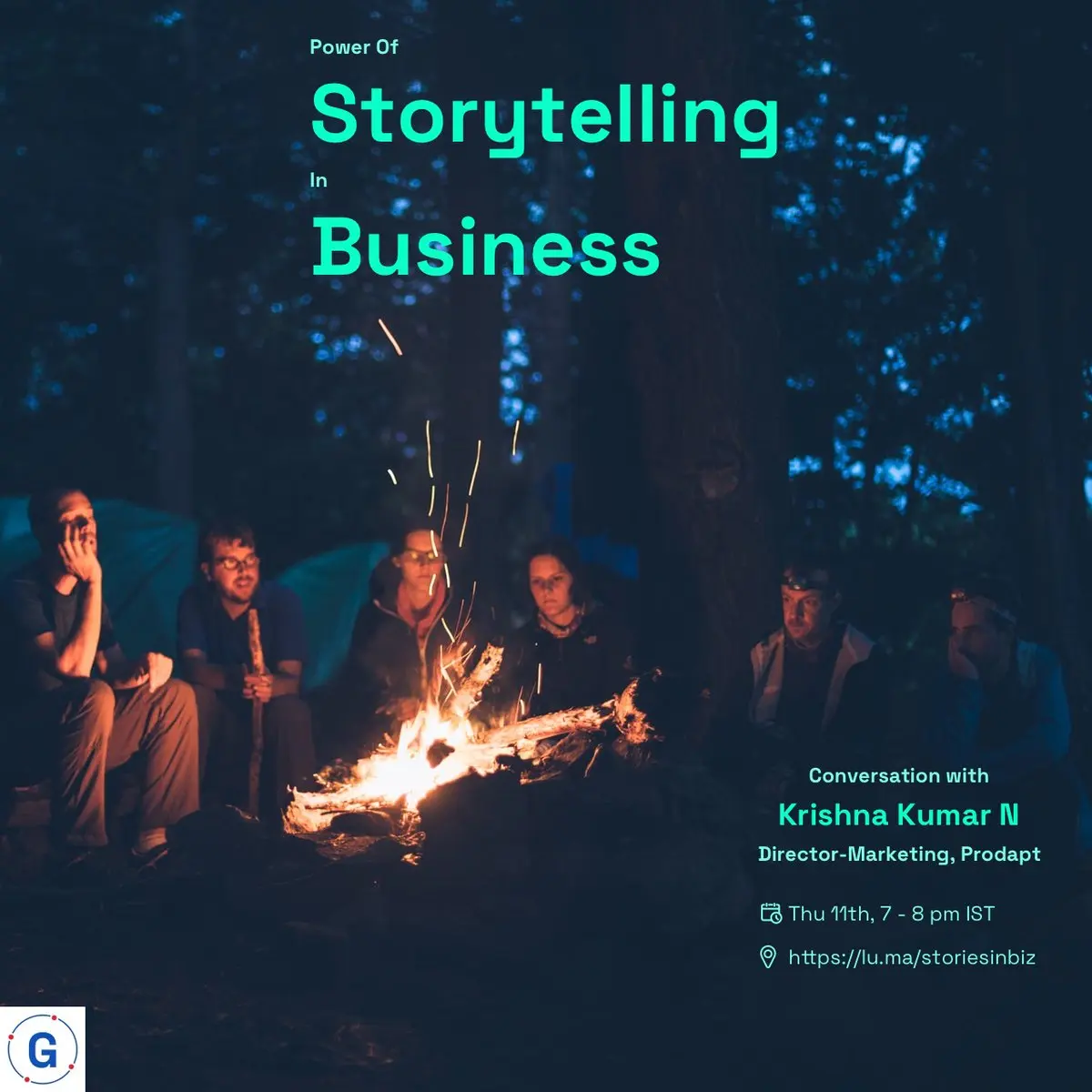
Does it interest you? Would you like to join the conversation? It happens on Thursday 11th at 7 - 8 pm IST. Would be lovely to have you there. Register here:
In my weekly "Gravitas WINS show," I'm discussing "The power of storytelling in busines" with a friend and a master storyteller. - What is storytelling in a business context? - How can you use stories to build credibility? - How can you use stories in critical conversations?
Somehow when we get into office, we leave the skills that make us human. We have been telling stories ever since...we were cave men. Why should we leave that part of us? Especially if they are useful?
@jsparkblog Such a deep insight into people. True for everyone, not just homeless people. Thanks for sharing Park.
@sumitgrrg What can individuals do to protect themselves from the climate change effects?
@SimonHoiberg Just last week paid in full. How can I take advantage of this offer?
@jk1234jk @dickiebush Life is always a balance between battles & blessings. Especially true in these tough years. Hope you are able balance between these two emotions. Good luck.
@BillyBroas Leaders swing between fear and pride. Rather, leaders should work with humility and confidence - Ken Blanchard in his book "Lead Like Jesus"
@theTonyNash Knowing that I am going to be dead soon helped me make big choices in life - Steve Jobs
Knowing the type of decision will help you to choose the strategy to make great decisions. Now make a great decision and follow me :-) It is after all it is a reversible decision.
While driving on a highway, you might take the inner-city road rather than the coastal road that you wanted to take. Still you could control the wastage of hours and reverse the decision.
Unless you are Ross (of the Friend's TV series) you want your marriage to last until your death. Reversing a marriage is not possible, though you could get out of it. Still, it will affect your life.
What about significant decisions? There are two types of significant decisions. - controllable, hence reversible - conseqential, thus non-reversible Let us talk about the consequential decisions first
Though routine decisions should be easy to make, they can become difficult. How often have you stood frozen in-front of the dressing closet unable to decide the dress to wear? An important event like a date or an interview can make even the routine decision hard to make.
There are two types of decisions we make: - routine decisions - significant decisions Deciding what dress to wear on any day is a routine decision. Should you take up a job in a different city and move to a whole new environment is a significant decision.
